"It Ends with Us" by Colleen Hoover

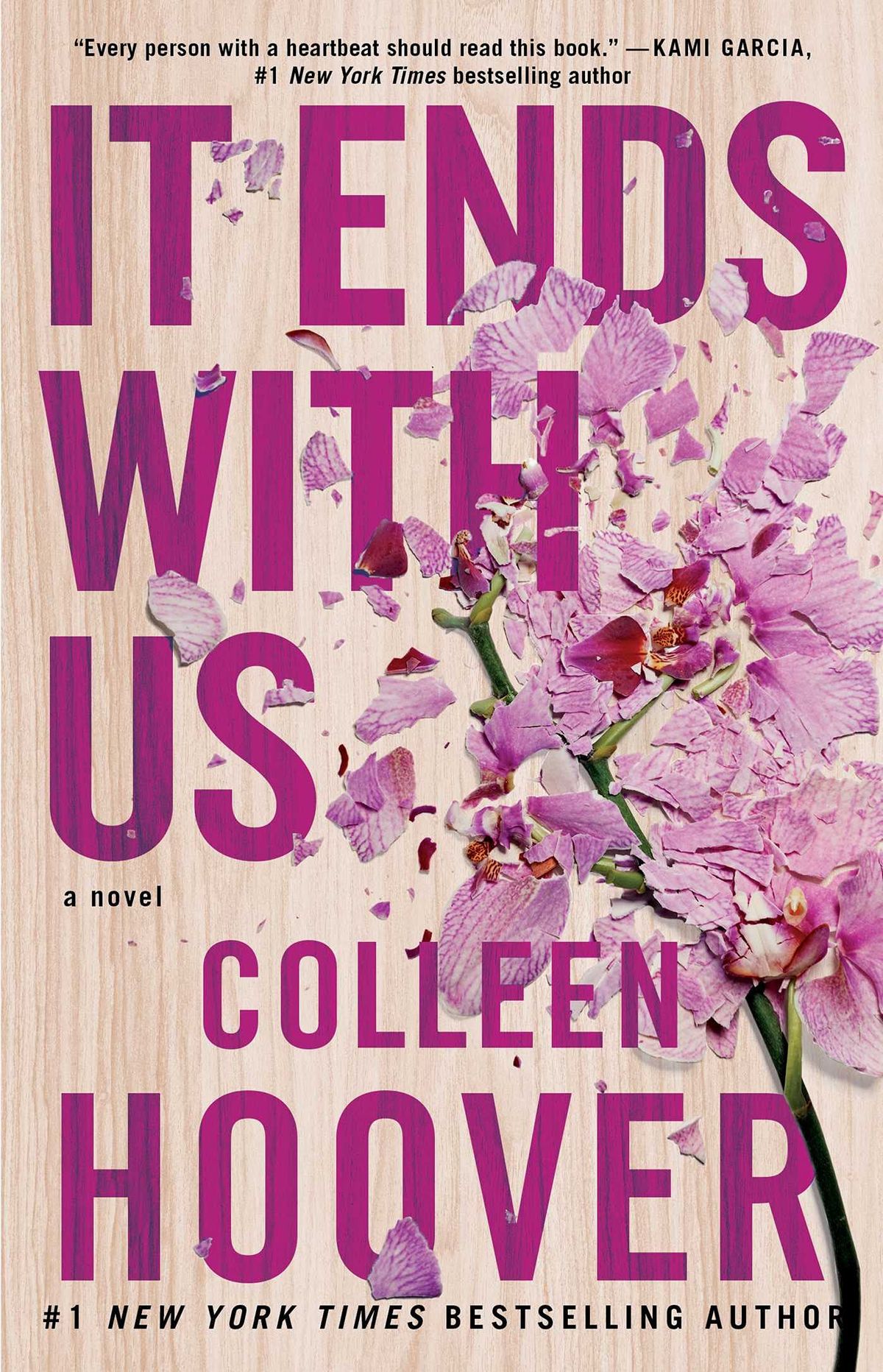
If you are not already aware, Colleen Hoover’s It Ends With Us is the story of Lily Blossom Bloom, who falls into an abusive relationship with a man name Ryle Kincaid. It has received widespread criticism for romanticizing domestic abuse, and for (Domestic Shelters.org wrote this strong condemnation of the book and phrases these arguments better than we can).
I know what you’re thinking. This is a famous and popular book about domestic abuse written by a woman, that found an audience with young women online, selling millions of copies in the process. A group of guys is probably the last ones who should be having an opinion on the subject, especially ones who have never faced domestic abuse themselves and are unlikely ever to.
But I actually think the opposite. I think it behooves men to read and discuss books like this, not only to better understand other perspective, but in order to see how patriarchal tropes about abusive relationships pervade all of society even books by women for women on the subject of domestic abuse
And that’s why we’re discussing this book this week; not because women need this book mansplained to them, but because all of us – men especially – can learn from this book in order to see just how bad things really are in our society when it comes to popular discussions about gender-based violence and domestic assault.
Let’s start from the beginning. Lilly Blossom Bloom is a 23-year-old ginger who loves flowers. Let’s just ignore how preposterously lazy the writing is for a moment. The scene opens in Boston where she stands on the roof of an apartment building that she doesn’t live in. She is standing off the edge, wondering if people who commit suicide ever think “Well crap, this was a bad idea.”
The flippant way that suicide is discussed sets the tone for the book: serious topics are engaged with only at surface level. Enter Ryle Kincaid, hunky neurosurgeon. He is, well, all riled up about something. He kicks open the door and starts throwing chairs around without seeing Lilly Blossom Bloom. He reveals its because he lost a patient that day; a small boy shot by his brother when playing with their dad’s gun. They end up chatting, and he flirts with her and says “I want to fuck you.” And we are supposed to find it charming.
We also get flashbacks to Lilly Blossom Bloom’s past, as she reads her diaries. She addresses them all to Ellen Degeneres. As dumb as that is, we have to forgive the author for not knowing just how much the world would come to hate Ellen later in time. As a teenager, Lilly Blossom Bloom noticed a homeless boy – Atlas Corrigan – in the empty house behind hers. He was beautiful with bright blue eyes, so she gives him a sandwich and lets him shower, and they fall in love. We also learn that Lilly Blossom Bloom grew up in an abusive household, and that her father would beat her mother, and also beat up Atlas Corrigan.
Back in the present, Lilly Blossom Bloom opens a flower shop. A rich woman – Alyssa – walks in and offers to work for free, and they become best friends. But it just so happens that Alyssa’s brother is none other than Dr Ryle Kincaid. He sees Lilly Blossom Bloom, and follows her to her building, sneaking in, and knocking on every door until he finds her. And when he does, he begs her for sex. And again; we’re supposed to find it romantic. And we also learn that on the first night they met Ryle was taking pictures of Lilly Blossom Bloom and had them printed and framed in his house. How dreamy. We also learn that Dr Ryle Kincaid supports the Boston Bruins, and again, we’re supposed to find this romantic instead of psychotic.
The two start dating and falling in love. But all is not well. When there is a mishap in the kitchen, Ryle pushes Lilly, knocking her down and hurting her head. She is wounded, but it was a small mistake, so she forgives him.
It gets worse. When they have a fight later, he pushes her down the stairs. Again; a mistake, a tragedy, but he’s a good man and Lilly Blossom Bloom loves him, so she accepts it.
It is only later during a particularly violent assault and attempted rape (which I don’t want to repeat because it is quite shocking) that she realizes that he has gone too far. When she goes to the hospital to treat her injuries, the doctor lets slip that she is pregnant.
She leaves Dr Ryle Kincaid, but not without forgiving him and telling him he’s a good man at heart. And agreeing to co-parent with him, since everyone deserves a second chance. The book even closes with her handing her child over to THE MAN WHO VIOLENTLY ABUSED AND ASSAULTED HER. This is not only profoundly dangerous, but also is illegal in many countries, and would make Lilly Blossom Bloom directly legally complicit in any abuse committed against the child.
This is why this book is a piece of shit. Not because of what it has to say about women, but what it has to say about men – and how it defends and enables the worst forms of behavior while claiming to empower.
Perhaps the author is claiming to be showing us not why abusers abuse but why victims stay. But if that is the case, then the abuse needs to be rightly condemned, not idealized as romance. We all know that it’s a common trope that romance novels and movies often romanticize behavior by men that would be seen as aggressive or even psychotic in real life. They don’t take no for an answer, they stalk the woman, they insist, they beg. We accept that in romance novels, to some extent.
But any book about domestic assault needs to take challenge those tropes, not accept and celebrate them. Rile’s problematic behavior is never questioned, not even in retrospect. It is still depicted as romantic that he stalked Lilly, that he refused to take no fo an answer, that he insisted and begged for sex. And Lilly still loves him, because he’s a good man. And so she gives her daughter to him.
Far be it for me to explain feminism or domestic abuse to women. But for all the fellas out there, this book should give us all pause for thought. Not because it sheds light on why victims stay, but because of how well it shows that even in perhaps the most unlikely of places (a book by a woman for women about the abuse of women) we still see the impact of patriarchy and narratives that forgive and even celebrate abusers.