Modelland by Tyra Banks

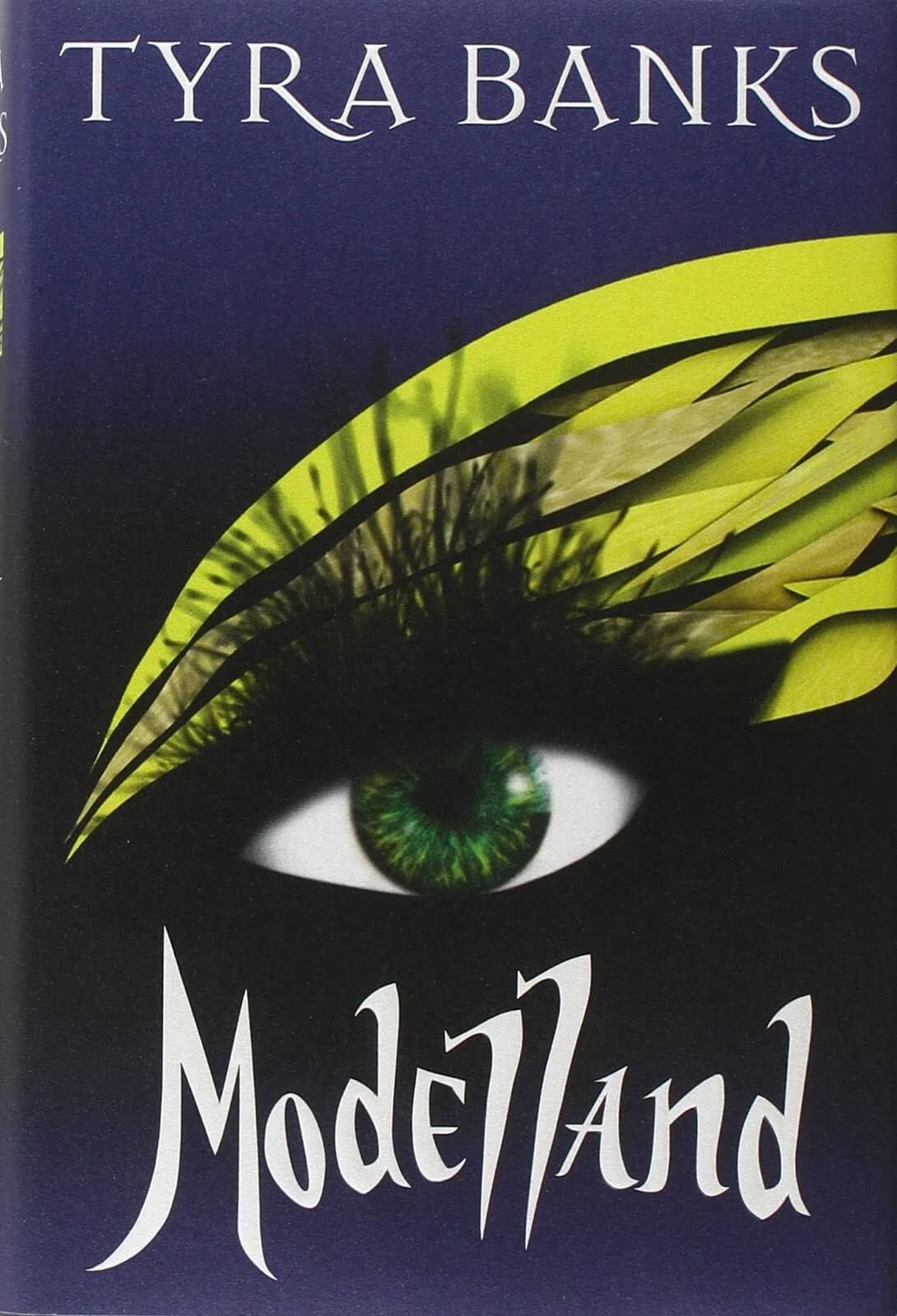
After more than a decade of notoriety, Tyra Banks’ Modelland – a bizarre dark fantasy YA novel about a magic modeling school - is once again having a moment in the sun. Since publication in 2011, the text has frustrated and fascinated countless commentators, critics and online cynics alike. After discovering a couple months back that Modelland had a worse Goodreads rating than Mein Kampf, we put it on the schedule for this season of the podcast. All in all, there’s probably little to say about Modelland that hasn’t already been said, and covering it feels almost more like a rite of passage in the world of shitlit than anything else.
Simply put, Modelland is a nightmare. It also occupies a specific space in shitlit. The book is bad – frustratingly bad – in ways that make it fascinating but also sort of difficult to discuss. The book is nearly 600 pages and incredibly dense, with bizarre lore and language alongside detailed characters and threads that ultimately go nowhere. At the same time, it is extremely vapid and as reader, you get the feeling almost immediately that it is flooding you with empty calories. While silly and lighthearted, it is also strangely gross, unsettling and invasive. Reading Modelland is sort of like eating an entire cheesecake while undergoing a colonoscopy. For this reason (and in the end, this might be the biggest tragedy), Modelland is both intriguingly bizarre but also too much and too long for it to be “so bad it’s good.” The same issue arises when trying to discuss Modelland: it’s hard not to overstay your welcome – whether that in a video essay, podcast, article, or just desperately unloading on your significant other. If nothing else, it was cathartic to discuss on the podcast and I’ll make a humble contribution to the discourse here.
Modelland opens with an exposition dump that gives you all the core details: the world of Metopia revolves around cosmetics, fashion, and modeling. Most poor, unfortunate souls toil away in blue collar jobs, some even underground. At the heart of the world is Modelland, a magical school for modeling on the very top of a mountain. It is surrounded by dangers and nearly impossible for anyone to reach, save for the few young girls selected each year during the Day of Discovery and magically whisked away to attend the school and have the chance to become top models with unique magic powers – intoxibellas – or even the very top model, a triple 7Seven, who gets all the powers. The world is laid out with a very straightforward hierarchy.
The protagonist - Tookie de la Crème – is introduced with an elaborate and bizarre physical description: she has feet the size of snowshoes, a punch-bowl sized head, different coloured eyes, baby fingers, and enormous unruly hair. Despite her appearance, at the same time Tookie is somehow very plain and unremarkable – a “forgettagirl.” In a rigidly superficial world, she sits at the very bottom of the ladder.
Tookie de la Crème is 15 years old and lives in Peppertown, where it is always hot. She’s the black sheep of her family, and her mother Cremalatta de la Crème, who goes by Creamy, spoils and favours her more beautiful younger sister Myrracle. Her best friend is a homeless girl named Lizzie. Tookie and Lizzie have a plan to run away together, but we will get to that later.
To cut to the chase, Tookie is chosen to go to Modelland on the Day of Discovery instead of Myrracle. She is selected by none other than Ci~L, the top intoxibella at Modelland who has seemingly gone rogue. Along the way, Tookie meets 3 other unconventional beauties that were surprise selections as well. The plot focuses on these 4 attending and exploring Modelland while searching for answers as to why they were all chosen. In parallel, Tookie’s mother Cremalatta takes Myrracle on a perilous journey to get to Modelland by foot.
The book occupies a sort of literary uncanny valley. For the most part, the main plot is straightforward, familiar and predictable despite many detours. Where there are twists, they tend to just provide unnecessary roundabout explanations for secondary characters’ actions. The story itself is not terribly interesting, and the book climaxes with a tremendous amount of flashbacks laying out various character’s motivations. What is most interesting about Modelland instead is the flavour and all the frivolous details that Tyra packs into each chapter. Made-up words, strange prose, detailed pointless lore, bizarre locations and rituals, pointless and grotesque side characters pack the pages to the point that the primary story arc becomes an afterthought. I can’t begin to cover it all, but a few notable elements emerge.
One thing that stands out is Tyra’s talent for horror. Perhaps it comes from a world of modeling and costumes, but there are some pretty fun monsters in Modelland. One monster that emerges from a lake is a mess of arms with musical instruments for a head. As it slaughters a group of innocent women and children, this creature rips its victims’ arms off, adds them to its body, and those arms start playing the instruments forming its head while the rampage continues. That is pretty scary, and probably something that would make a fun boss in a Dark Souls game.
However, most regular characters in the book have strange, detailed deformations as well. The school’s doctor has rollerskates for feet that she cruises around on. That might not seem too weird, but Tyra describes in detail how the rollerskates are literally an extension of the doctor’s flesh and made out of a skinlike material, including the wheels. Really try to picture that for a moment. Skin roller blades with skin wheels. It’s terrifying. So the problem here is really that everything Tyra writes comes out as horror, whether she intends it to or not.
Similarly, much of the story’s magical events or lighter moments are unsettling or gross. Shortly after arriving at Modelland, Tookie starts menstruating for the first time. It is revealed that this is part of the school’s magic - all the new recruits get their first period at the same time, and they will never have a period again for the rest of their lives. A key challenge is the ManAttack tournament, where the models fight off men from the male branch of Modelland, all of them in their underwear with a professor running colour commentary full of sex jokes. Near the end of the book, Tookie has her first kiss, a detailed scene where her new boyfriend Bravo fills both of their mouths with whip cream and then sticks his tongue in her mouth. Food is heavily sexualized throughout.
Disfigurement, gore and violence are persistent throughout the book. Early on, Tookie witnesses her father lose his eye in graphic fashion during a circus act gone wrong. Several characters self-harm and are covered in sores. Many of the tests and punishments in Modelland include hallucinations or literal disfigurement, such as characters’ heads splitting completely open to reveal their brain and their vocal cords like a “pile of spaghetti.” Characters are tortured. Creamy’s mother sexually assaults a man in a flashback. All told, there is a considerable amount more violence in Modelland than in a lot of pulp horror. What’s more, there is a constant tonal whiplash between these scenes and characters joking around as if they don’t live in a feverish nightmare.
The worldbuilding is vast but incoherent and pointless. No coherent ruleset develops for the reader. The world is not revealed to you slowly, but instead floods you with complex and pointless detail from the very first paragraph. One example is the SMIZE, something akin to Wonka’s Golden Ticket that are spread across the land prior to the Day of Discovery. The SMIZE can be found in water. Once discovered, it attaches to ones face as a kind of magic eyeshadow and increases their odds of selection at the Day of Discovery to 91%. Many words are spent on the SMIZE early in the book, but in the end it plays no role in Tookie’s acceptance into Modelland. Similarly, much of the beginning of the book is spent on Tookie’s relationship with her homeless friend Lizzie, who is regularly abducted and experimented on/tortured by unknown forces, and self-harms constantly. The two have a plan to run away together, but once Tookie enters Modelland, Lizzie is more or less forgotten for the remainder of the book. These are just some of innumerable threads that go nowhere - red herrings that are piled up and left to rot.
There is no mercy in Modelland. Students that escape are permanently aged 50 years as punishment. Tookie’s mother Creamy kills several innocent women and children on her perilous pilgrimage to Modelland. Failed students are transformed into living manikin slaves. The rebellious top model Ci~L is psychologically and physically tortured throughout the book, and after becoming the head of Modelland, she continues the standard system of punishment against the former head of Modelland, her own mother. Even our protagonist Tookie De La Crème is merciless by the end, laughing it off as she hears her 13 year old sister trapped and under attack in Catwalk Corridor, a strange chamber of punishment where bad behaving models are turned into violent, aggressive giant cats. Sure, Myrracle bullied Tookie as a kid, but she’s otherwise more or less just a dumb, innocent child.
This is where it can be confusing what exactly Tyra is trying to say. The world is incredibly cruel and unfair to the point of feeling satirical at times, but at its core Modelland isn’t a work of satire or a dystopian critique. We are still expected to root for characters to succeed within and preserve a system that is blatantly horrible. There is certainly some criticism of the modeling industry here, but it tends to focus on personal grievances and bad actors rather than any particular issues with the world itself. It is meant to be inspirational, but only within the confines of a zero sum game. The message ends up more “girlboss, gaslight, gatekeep” than “liberté, égalité, fraternité,” which feels off for the soulless world the characters inhabit. It is 1984 if Winston’s whole plan was to grow a better moustache than Big Brother. This is all owing to the fact that the protagonist is a self-insert, and what we are really reading is Tyra’s self-mythologizing as a groundbreaking underdog who climbed that mountain. You can’t really do satire and a vanity project at the same time. I also think she may be simply unaware how ugly and unsettling many of the things she describes in Modelland truly are.
In the end, we survived Modelland. For a book with so many bizarre elements, it sadly ends up more of an endurance challenge than anything else, like pushing through a run in the rain. That is probably the book’s saddest near-miss: if it were just as batshit but half the length, it would be on the Mount Rushmore of shitlit. Perhaps with time, some more accessible adaptations in other mediums will appear. For now, my only advice for would-be readers is this: do not attempt the pilgrimage alone. Travel it with only your most trusted friends, as we did.